
Assessing the safety and suitability of using silver vine as an olfactory enrichment for cats
Reiko Uenoyama, Sae Ooka, Tamako Miyazaki, Hiroki Mizumoto, Toshio Nishikawa, Jane L. Hurst, Masao Miyazaki. Assessing the safety and suitability of using silver vine as an olfactory enrichment for cats. iScience, Volume 26, Issue 10 (2023). See original source.
Abstract: Summary
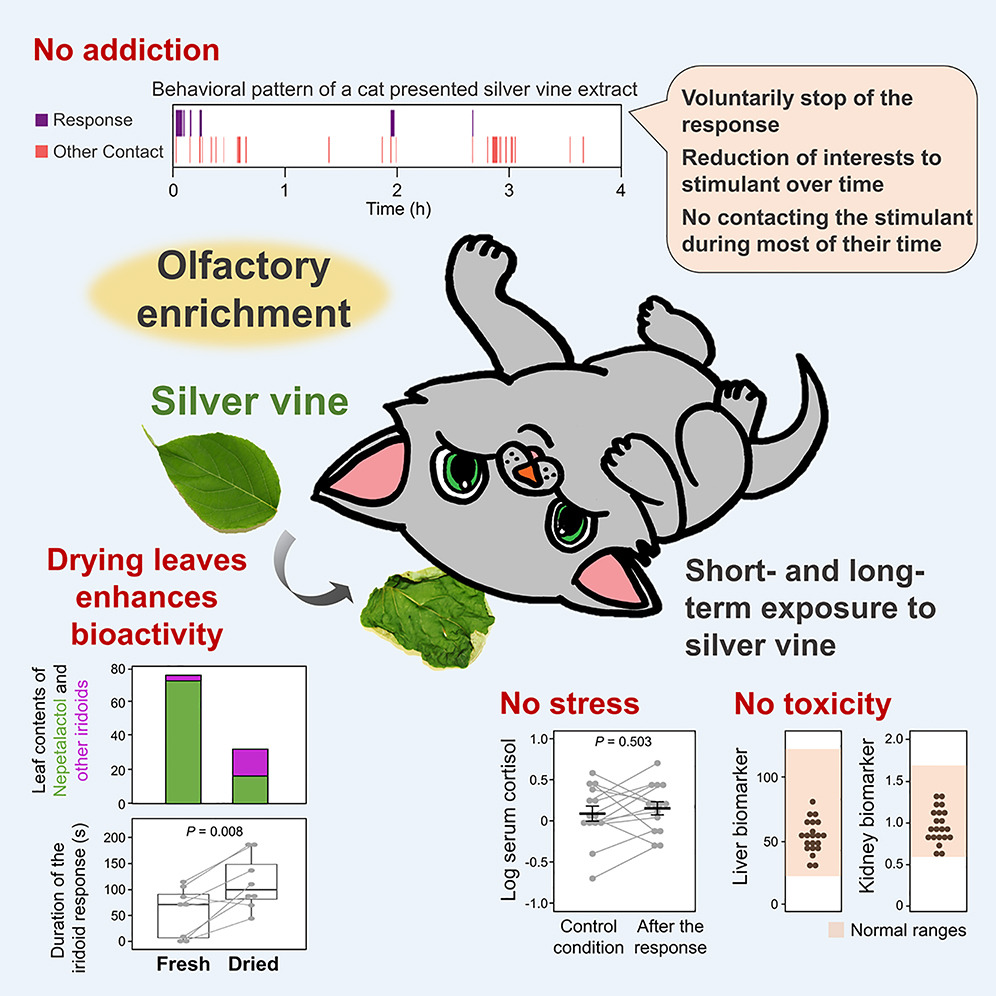
Olfactory enrichment is a strategy that can improve welfare among animals managed in captivity, such as household domestic cats. Catnip (Nepeta cataria) and silver vine (Actinidia polygama) that produce iridoids are used as olfactory enrichments for cats, but little is known about the safety or the best plant resources to use that maximise positive cat responses. We report physiological effects and suitable harvest and drying methods for using silver vine as olfactory enrichment. Continuous exposure of cats to silver vine showed no hallmarks of addictive behaviour, while blood indicators of stress and hepatic or renal injury showed no increase in cats stimulated with it. Drying the leaves changed the iridoid profile, enhancing the feline response. In conclusion, dried silver vine leaves are the most suitable resource for developing olfactory enrichment that maximises feline typical response, which would not result in dependence, stress, or toxicity to the liver or kidneys in cats.
Keywords: Animals; Toxicology; Phytochemistry
DankNips “Takeaways” from this study:
It is proven to be completely safe, nontoxic and nonaddictive to give cats catnip and silvervine, with no adverse effects. Therefore it is only a positive addition to your cat’s life. Drying leaves enhances bioactivity therefore that is the best way to serve it. That’s why we developed our signature MataTabi treat, containing only dried silver vine leaf with a sprinkling of seaweed for additional sensory intrigue along with nutritional and dental benefits.